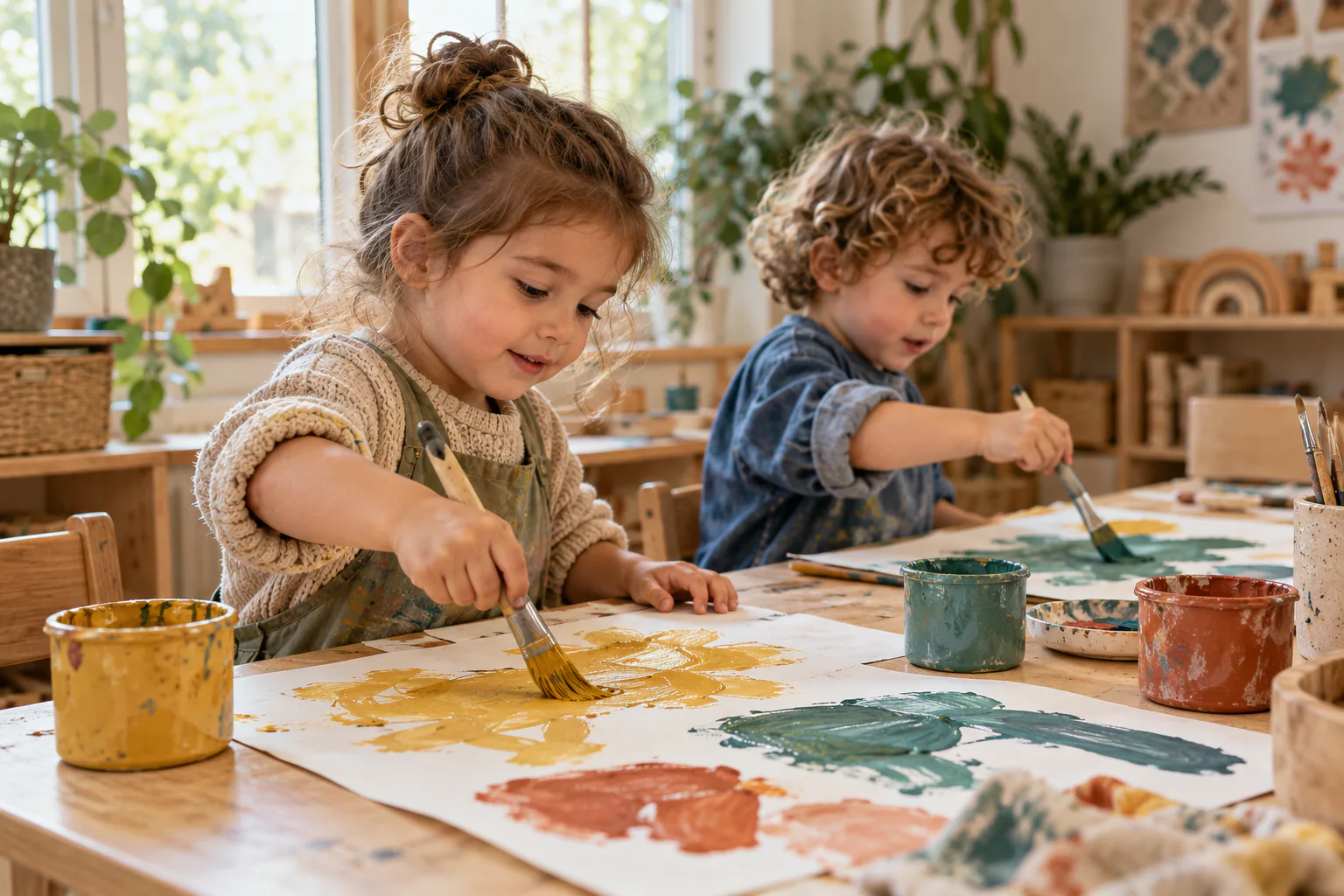
Colours without a template: creating for the joy of trying
Mixing, making marks, changing an idea. When paper does not have to become a finished picture, the process has room to surprise.
A blank page does not need a destination
A blank sheet can hold a line, a patch of paint or many overlapping colours. It does not have to begin with a promise to become a flower or a house. Sometimes the interest lies in the brush meeting the paper and the mark that gesture leaves.
Without a finished image to reproduce, small choices have room: which colour comes first, where a line ends, whether the next mark sits near the last one or far away. Someone watching can notice these decisions without needing to name what is taking shape.
Prepare a simple invitation
A few materials can be enough to begin. Paper and tools appropriate to the child’s age, a protected surface and an adult nearby give the moment its setting. Materials should be intended for children and used according to the manufacturer’s instructions.
There is no need to put every option on the table at once. You can also agree where materials may be used and how they will be put away. These practical boundaries define the space for experimenting without deciding what the work should look like.
Comment on what you can see
“You used lots of blue here” describes a choice without deciding what the picture means. “Would you like to tell me about this part?” invites a conversation if the child wants one. An abstract painting does not need to become recognisable to deserve attention.
Some children want to explain every mark; others prefer to keep going quietly. Changing an idea, painting one colour over another or stopping before filling the page are all possibilities. There is no need to correct the picture to match an adult’s expectations.
Make room for what happened
When the moment ends, you can look at the paper together and remember a detail: an unexpected mixture, a line crossing the page or the choice to use only one colour. The conversation can value the journey as well as the finished result.
Keeping or displaying the work can be a shared choice rather than a requirement. The paper records one part; the experience includes gestures, discoveries and changes that the image cannot fully show. Creating can also be as simple as being in that moment.